
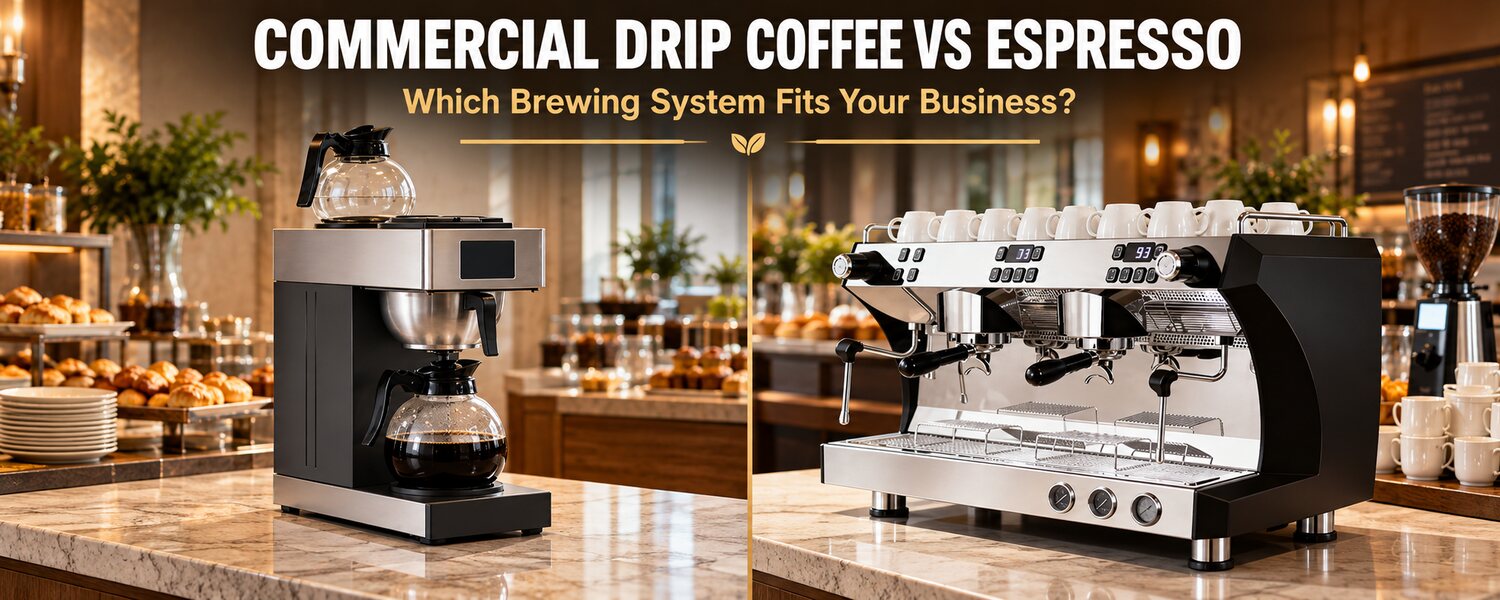
When buyers search for a commercial drip coffee machine, they often compare it with a commercial espresso machine before asking for a quotation. Both machines prepare coffee, but they support very different service models. The right choice depends less on which machine looks more professional and more on what your customers order, how quickly you must serve them, and how much staff involvement your operation can support.
This guide explains the main differences for cafés, hotels, restaurants, offices, convenience stores, catering companies, and equipment distributors. It also shows when one system is enough and when a business may benefit from using both.
Quick Answer
Choose a commercial drip coffee machine when you need to prepare brewed coffee in batches, keep service simple, and serve many cups with limited staff involvement. Choose a commercial espresso machine when your menu depends on espresso, cappuccino, latte, and other drinks prepared one order at a time.
A hotel breakfast area, meeting room, buffet, office pantry, or self-service counter often fits drip coffee well. A café, bakery, restaurant bar, or specialty beverage counter may need an espresso machine. Some high-volume businesses use both because the two systems solve different service needs.
Commercial Drip Coffee Machine vs Espresso Machine at a Glance
| Buying factor | Commercial drip coffee machine | Commercial espresso machine |
|---|---|---|
| Main beverage | Batch-brewed filter coffee | Espresso and espresso-based drinks |
| Service style | Brew in batches and pour as needed | Prepare drinks to order |
| Staff involvement | Usually lower after the batch is prepared | Usually higher, especially for grinding, dosing, extraction, and milk steaming |
| Best fit | Breakfast service, buffets, offices, meetings, catering, and self-service stations | Cafés, restaurants, bakeries, coffee bars, and beverage-focused counters |
| Menu range | Regular brewed coffee | Espresso, americano, cappuccino, latte, and related drinks |
| Peak-hour workflow | Prepare coffee before or during the rush and serve repeatedly | Prepare each drink individually as orders arrive |
1. The Brewing Method Creates a Different Customer Experience
A commercial drip coffee maker passes heated water through ground coffee held in a filter. The brewed coffee flows into a decanter, server, or thermal container, depending on the machine and serving setup. The operator prepares a batch that can then be poured into several cups.
An espresso machine pushes pressurized water through a compact coffee bed to create a concentrated shot. Staff can serve that shot directly or combine it with water or milk. This makes espresso equipment suitable for menus where customers expect drinks to be prepared individually.
Neither method is automatically better. Filter coffee emphasizes simple, repeatable batch service. Espresso supports a wider made-to-order menu.
2. Compare Peak Demand, Not Only Daily Cup Volume
Total cups per day can be misleading. A business may serve a moderate number of cups overall but receive most orders during a short breakfast period, conference break, or lunch rush. In that case, peak demand matters more than the daily total.
A commercial drip coffee machine can prepare coffee before the rush and support fast pouring when many guests want a similar drink. An espresso machine can produce a broader selection, but every order requires its own preparation steps.
Before choosing, record how many cups you expect during the busiest 15, 30, and 60 minutes. Then compare that demand with the brewer's batch size, brewing cycle, holding method, and recovery time. Our commercial drip coffee machine capacity guide explains this calculation in more detail.
3. Consider Staff Skills and Training
Drip coffee service is generally easier to standardize. Staff measure coffee, place the filter, start the brewing cycle, and serve the finished batch. Clear procedures still matter, especially for coffee-to-water ratio, filter placement, cleaning, and holding time.
Espresso preparation usually requires more staff attention. Grind size, dose, extraction, milk texture, workflow, and cleaning can affect drink consistency. If staff turnover is high or the beverage station is not continuously attended, the training requirement should be part of the buying decision.
For a self-service breakfast room or office pantry, simple operation may be more valuable than a large drink menu. For a café where coffee is a core product, the extra training required for espresso may be justified.
4. Match the Machine to the Menu
Start with what customers actually order. If the main requirement is black coffee served quickly, a commercial drip coffee machine may cover the need without adding unnecessary complexity. If customers expect cappuccino, latte, flat white, or espresso, an espresso machine is the more suitable foundation.
Some buyers choose espresso equipment because it appears more versatile, even when most guests only want regular brewed coffee. That can create a slower and more labor-intensive workflow. Other buyers choose drip equipment for a location where customers expect a full espresso menu. That creates a different mismatch.
Write down the planned menu before comparing machines. Separate essential drinks from optional drinks. This simple step prevents the equipment decision from being driven by features the business may rarely use.
5. Review the Water, Electrical, and Counter Setup
Installation requirements vary by model. Some commercial drip brewers use manual water filling, while others connect to a water line. Espresso machines may also use an internal tank or a plumbed connection, depending on their design. Voltage, power, drainage, water filtration, counter space, and access for cleaning must all be confirmed before ordering.
Do not assume that two machines with similar external dimensions have the same installation needs. Ask the supplier for the current specification sheet and installation instructions for the exact model. If you are comparing water-filling systems for a drip brewer, read our guide to pour-over vs plumbed-in commercial drip coffee makers.
6. Calculate the Full Operating Requirement
The purchase price is only one part of the decision. Buyers should also review filters, grinders, decanters or thermal servers, water treatment, cleaning supplies, staff time, and planned maintenance. Espresso equipment may require additional accessories and more frequent operator attention. Drip coffee equipment may need multiple serving containers if the business prepares different coffees or serves several stations.
Ask what must be purchased with the machine and what is optional. Also confirm how the equipment will be cleaned during daily service. Our commercial coffee brewer maintenance guide provides a practical daily, weekly, and monthly checklist.
Which Machine Fits Different Business Types?
Hotels and Breakfast Buffets
A commercial drip coffee machine is often a practical choice when guests want regular coffee during a concentrated breakfast period. The team can prepare batches and place them at a staffed or self-service station. Hotels with a lobby café or made-to-order beverage menu may also need an espresso machine.
Restaurants and Bakeries
The decision depends on the menu and service style. A restaurant that mainly serves coffee after meals may prefer batch brewing. A bakery or restaurant selling milk-based coffee drinks throughout the day may need espresso capability.
Offices and Meeting Rooms
Simple operation, repeatable batches, and quick pouring often make commercial drip coffee equipment suitable for offices, training rooms, and conferences. Buyers should also consider who will refill, clean, and monitor the machine.
Cafés and Coffee Bars
If espresso-based drinks are central to the business, an espresso machine is normally the main production tool. A drip brewer can still add value by providing batch coffee during peak periods, serving customers who prefer filter coffee, or supporting a separate self-service area.
Catering and Events
Caterers should compare transport, water access, power availability, batch preparation, holding method, and serving speed. A drip setup can work well when large groups need regular coffee at the same time. Espresso service may suit premium events but requires a more involved operating setup.
When Should a Business Use Both?
Using both systems can make sense when the business serves two clear demand patterns. The drip brewer handles regular coffee and peak-volume service, while the espresso machine supports made-to-order drinks. This can reduce pressure on the espresso station without removing menu choice.
However, two machines also mean more counter space, cleaning, training, and equipment investment. Add the second system only when customer demand and workflow justify it.
Buyer Checklist Before Requesting a Quote
- What drinks must the business serve?
- How many cups are needed during the busiest hour?
- Will drinks be self-service or prepared by trained staff?
- Is manual water filling acceptable, or is a water-line connection required?
- What voltage and power supply are available?
- Will coffee be held in glass decanters, airpots, or thermal servers?
- How much counter space is available for the machine and accessories?
- What cleaning work must staff complete each day?
- Which accessories are included in the quotation?
- Can the supplier provide specifications and testing information for the exact model?
Frequently Asked Questions
Is a commercial drip coffee machine the same as a commercial coffee brewer?
The terms often overlap when buyers are referring to equipment that prepares filter coffee in batches. Product designs and serving systems vary, so buyers should compare the actual brewing method, capacity, water-filling system, and container type rather than relying on the product name alone.
Can a commercial drip coffee maker replace an espresso machine?
It can replace an espresso machine only when the menu does not require espresso or espresso-based drinks. Drip coffee and espresso are different brewing methods and create different beverages.
Is a commercial drip coffee machine suitable for a café?
Yes. A café can use one for batch-brewed filter coffee, faster peak-hour service, or customers who prefer regular brewed coffee. Whether it should be the main machine depends on the café's menu.
What information should I send a supplier?
Share the target market, venue type, expected peak volume, serving method, available voltage, water setup, preferred container, and any required compliance documents. This helps the supplier recommend a more suitable model and quotation.
Final Decision
Choose the machine that supports your real service model. A commercial drip coffee machine is a strong option for fast batch service, regular brewed coffee, and operations that need a straightforward workflow. A commercial espresso machine is better suited to made-to-order espresso drinks and menus that justify additional staff involvement.
CareforCafe supplies commercial coffee equipment for different service environments. Explore our commercial coffee machine range or contact our team with your menu, peak-hour volume, voltage, and water requirements. We can help you compare suitable configurations for your market.