

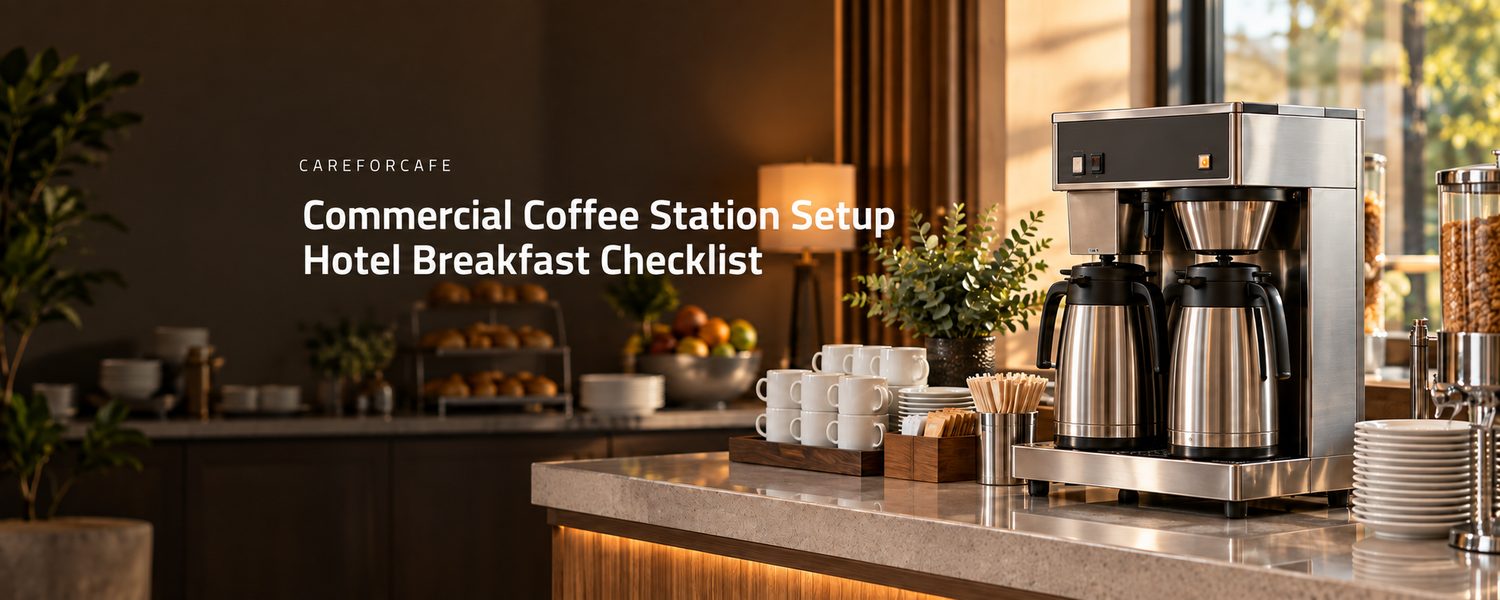
A smooth hotel breakfast coffee service starts before the first guest arrives. A brewer can be ready to make coffee while the station still lacks clean serving vessels, cups, a clear refill plan, or room for staff to work. Use this commercial coffee station setup checklist to prepare the whole service path, from the brew counter to the guest's cup.
The checklist is designed for hotel breakfast teams using commercial drip or filter coffee brewers. Adapt each step to your equipment manual, food safety procedures, floor plan, and expected guest traffic.
1. Estimate demand by service window
Start with the breakfast period, not a single daily cup total. Note the expected guest count, the opening time, the busiest arrival window, and whether coffee will be served at one point or several. A conference group arriving together creates a different refill pattern from a steady stream of overnight guests.
Translate that plan into an opening quantity and a replenishment point. Staff should know when to start the next brew before the serving vessel runs empty. If demand varies, record what was actually served and adjust the next day's starting plan. For equipment selection, our commercial drip coffee machine capacity guide explains the questions to ask when matching a brewer to peak periods.
2. Give brewing and serving their own space
Trace the route staff will take to fill, brew, move, and replace a vessel. Keep the brewer on a stable work surface with the clearance, power supply, and water access specified for that model. Place cups, lids, stirrers, and condiments where guests can reach them without blocking staff who need to replenish coffee.
Where the layout allows, separate the staff's brewing area from the guest-facing pickup area. Check that a full vessel can be moved safely and that handles and dispensing points remain easy to reach. If the machine uses manual filling, set out a safe water-filling route; if it uses a water connection, confirm the installation against the manufacturer's instructions.
3. Complete the opening equipment check
Before switching on the commercial coffee brewer, have the assigned operator check the work surface, power cord, correct electrical rating, water supply method, filter basket, and clean serving vessel. Follow the model's manual for startup and brewing. Do not use equipment that shows damage or a fault; follow the site's escalation procedure instead.
Keep this opening check short enough to perform every day. Detailed cleaning and scheduled care belong in a separate routine. Our commercial coffee brewer maintenance guide covers daily, weekly, and monthly planning.
4. Stage everything needed for the first refill
Place the approved coffee, correctly sized filters, clean vessels, and guest supplies close to the people who will use them. Check the fit of filters and vessels for the exact brewer and serving setup. If a backup vessel is part of the plan, confirm that it is clean and ready before service opens.
Label coffee choices clearly where guests choose them, following the hotel's own labeling practice. Keep the setup simple enough that a second staff member can take over without searching for supplies or asking how the station works.
5. Assign an owner and a replenishment trigger
A coffee station needs a named check, not just a general instruction to “keep it full.” Decide who checks the serving point, how often it is checked during the busy period, and what observation starts the next brew. The trigger can be a visible level, a timed check, or a handover from the breakfast host, depending on the layout and equipment.
Write down who may start a brew, who moves the vessel, and who responds if the machine or water supply needs attention. At a multi-station breakfast, identify which station gets the next prepared vessel. This makes replenishment easier to coordinate when the queue begins to grow.
6. Leave a brief shift handover
At the end of the service window, note the number of brews or vessels used, any time the station ran low, equipment issues, and supplies to restock. The next operator can then set the opening quantity with better evidence. Record cleaning and shutdown according to your site's procedures and the machine manual.
Quick pre-service checklist
- Demand: Opening quantity, busiest window, and refill trigger are agreed.
- Site: Stable counter, access, power, and water method match the brewer instructions.
- Brewer: Assigned operator has checked the cord, basket, vessel, and startup procedure.
- Supplies: Coffee, compatible filters, clean vessels, cups, and guest items are staged.
- People: One person owns checks; a backup knows the refill and escalation process.
- Handover: Usage, shortages, and faults have a place to be recorded.
Planning a station across several properties?
Use the same questions at each site, then confirm the details locally: expected peak demand, counter footprint, available voltage, water method, vessel type, and who will operate the station. A brewer should be chosen for the service pattern and installation conditions of the property. Our commercial drip coffee machine buying guide offers a broader comparison for breakfast, meetings, and catering.
Share your breakfast service window, estimated cup demand, and serving arrangement with CareforCafe. We can help you identify a suitable commercial coffee brewer setup and the equipment details to confirm before ordering.