
1. What Is the Main Use Scenario?
Different businesses need different beverage solutions. A hotel breakfast area may need stable batch brewing and fast self-service. A café may focus more on beverage quality and presentation. A restaurant may need tea and hot water solutions that support peak meal hours. A distributor may care more about product range, market demand, and after-sales support.
Before choosing equipment, buyers should first define the real use scenario:
Is the equipment for self-service or staff operation?
Will it be used during breakfast, lunch, dinner, or all day?
Is the priority coffee, tea, hot water, or multiple beverage options?
How many cups are expected during peak hours?
Once the use scenario is clear, it becomes easier to choose the right capacity, structure, and product category.
2. Does the Equipment Match Daily Operating Needs?
Commercial beverage equipment must be practical. A machine may look attractive, but if it cannot handle daily volume, cleaning requirements, or staff operation, it may create more problems than value.
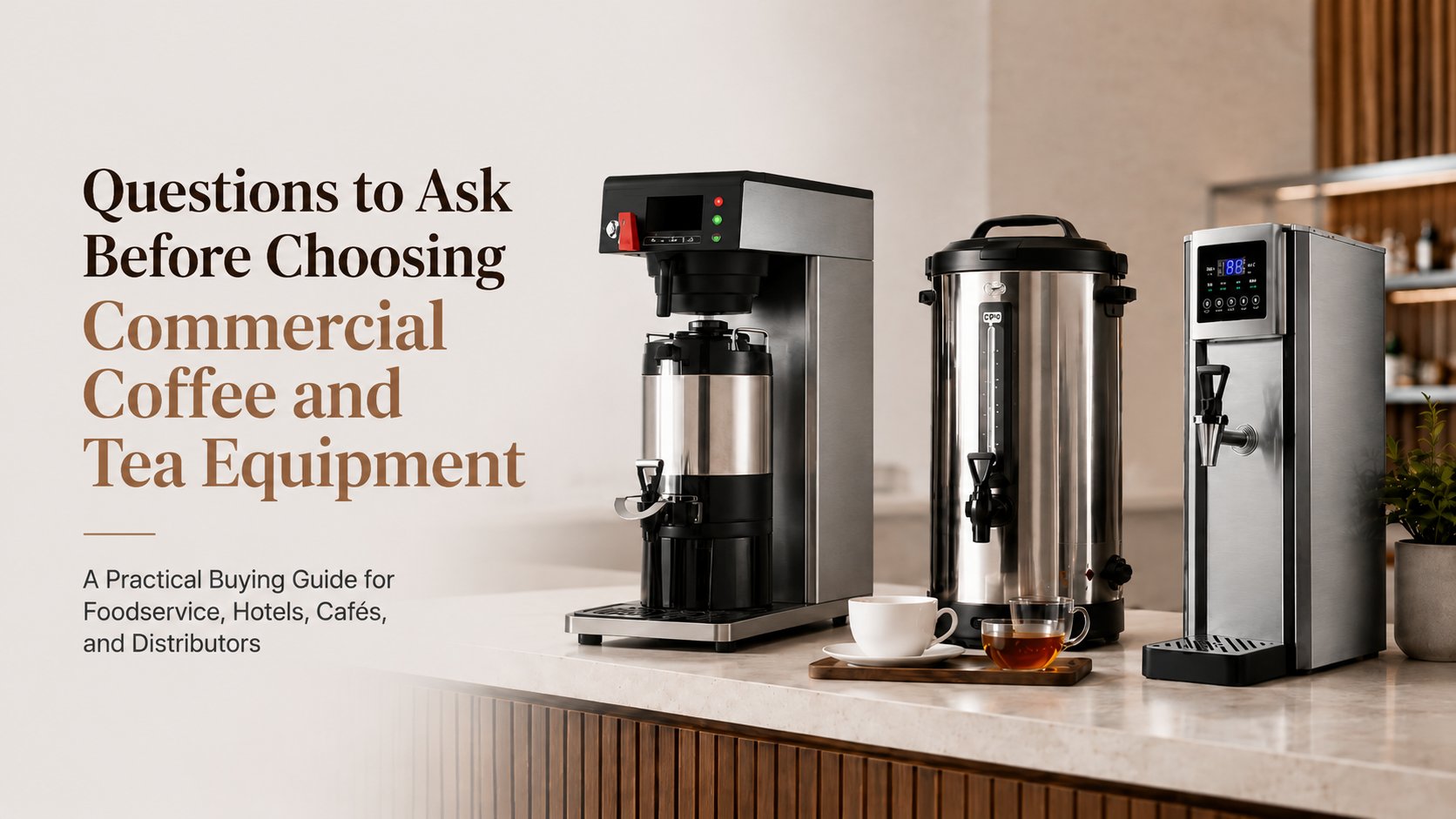
For example, a commercial drip coffee brewer should provide consistent brewing performance and be easy to operate during busy service hours. A tea dispenser should support stable temperature control and convenient dispensing. A hot water dispenser should provide reliable hot water access for tea, coffee, instant drinks, and kitchen support.
Important practical questions include:
Is the machine easy for staff to use?
Is cleaning and maintenance simple?
Can it support continuous operation during peak hours?
Is the capacity suitable for the business location?
Does the machine fit the available counter or service area?
The best equipment is not always the most complex machine. It is the machine that fits the real workflow.
3. Can the Equipment Support More Menu Possibilities?
A good equipment investment should not only solve one current need. It should also create more beverage opportunities.
For many businesses, beverage equipment can support more than one product. Commercial coffee machines can support breakfast coffee, office coffee service, buffet service, and restaurant beverage programs. Tea dispensers can support iced tea, milk tea bases, fruit tea, herbal tea, and self-service beverage stations. Hot water dispensers can support tea, instant drinks, catering service, and back-of-house preparation.
Before buying, consider whether the equipment can help expand your menu:
Can it support more beverage types?
Can it improve service speed?
Can it help increase beverage sales?
Can it support seasonal drinks or new product lines?
Can it be used across different business scenarios?
For distributors and brand owners, this is especially important. A flexible product line makes it easier to serve different customer groups, including hotels, restaurants, cafés, catering companies, and commercial kitchens.
4. What Should Distributors Consider When Choosing a Supplier?
For distributors, choosing equipment is also choosing a long-term supply partner. Price is important, but stable supply, product consistency, customization capability, and communication efficiency are equally important.
A reliable manufacturer should be able to support different market needs with stable production capacity and practical product solutions. OEM and ODM options can also help distributors build stronger product differentiation in competitive markets.
Key supplier questions include:
Can the supplier provide stable product quality?
Can they support regular production and repeat orders?
Do they understand export requirements?
Can they provide OEM or ODM customization?
Can they support different product categories under one supply system?
Can they communicate clearly during product selection, production, and shipment?
For long-term business, the right supplier should help reduce uncertainty, not create more of it.
5. What Are the Electrical, Certification, and Market Requirements?
Different markets may require different voltage options, plug types, product labeling, documentation, and certification standards. For commercial buyers, these details should be considered before confirming an order.
Restaurants, hotels, and distributors should check whether the equipment matches local market expectations. This includes power requirements, installation environment, user habits, safety expectations, and maintenance needs.
Asking these questions early can help avoid unnecessary delays and improve the success rate of product launch or project use.
6. Is the Equipment Suitable for Long-Term Business Growth?
The right equipment should not only work today. It should also support the future direction of the business.
A restaurant may expand its beverage menu. A hotel may increase breakfast service volume. A café may open more locations. A distributor may need a wider product range to serve different customers. In each case, equipment selection should consider future growth, not only the first purchase.
Buyers should ask:
Can this product support future demand?
Is the supplier able to provide repeat orders?
Can the product line expand into related categories?
Can the equipment be adapted to different business models?
Does this purchase support a stronger long-term beverage solution?
Conclusion
Choosing commercial coffee and tea equipment is a strategic decision. The right machine should match daily operations, support menu development, meet market requirements, and create long-term value.
At Carefor Cafe, we provide commercial coffee machines, tea dispensers, and hot water equipment for restaurants, hotels, cafés, distributors, and foodservice businesses. With practical product design, stable production support, and OEM/ODM capabilities, we help global partners choose beverage equipment that fits both current needs and future growth.
If you are looking for reliable commercial beverage equipment for your business, contact Carefor Cafe to explore suitable solutions for your market.