
Introduction: What is “Bean to Cup” — and what Careforcafe promises

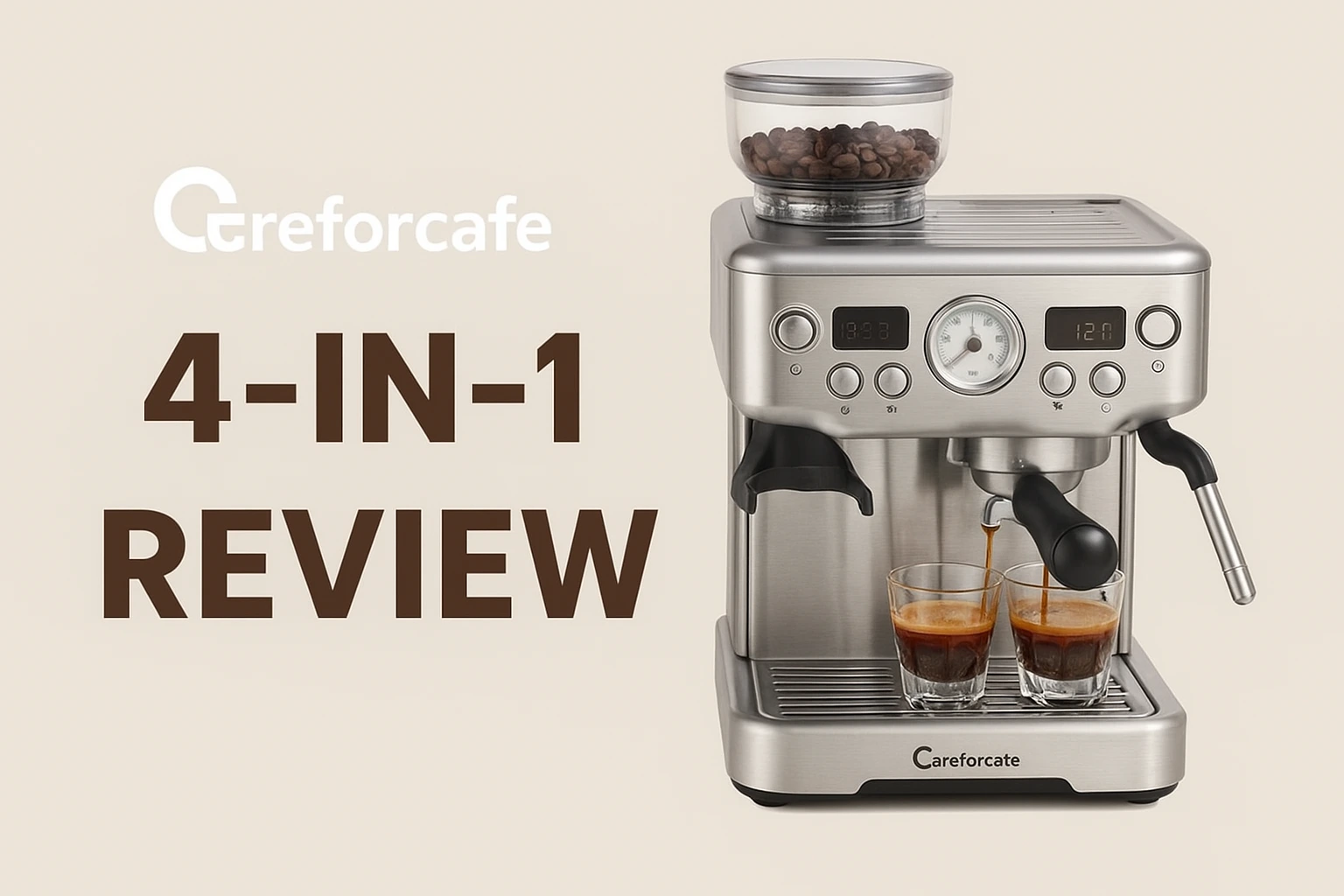
The Careforcafe 4-in-1 is a "bean-to-cup" (or "bean-to-cup”) espresso machine: unlike simple drip brewers or capsule machines, bean-to-cup machines take whole coffee beans, grind them inside the machine, then brew espresso (or espresso-based drinks) automatically. That gives users the freshness and aroma of freshly ground coffee, convenience (press a button), and the possibility of a variety of coffee drinks at home or in a small office.
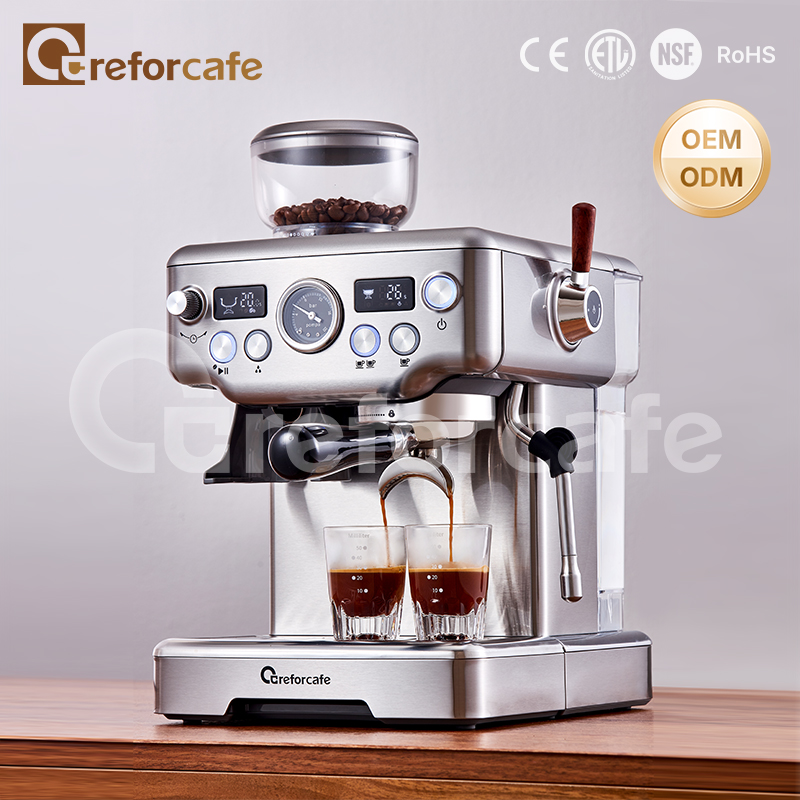
According to the manufacturer's listing, the Careforcafe 4-in-1 is designed for home, hotel, restaurant, or office use. Its main selling points:
- Built-in grinder (bean container ~ 180 g). Alibaba
- Pump pressure: 15 bar (ULKA pump).
- Water tank capacity: 2.1 L.
- Multi-function: espresso, Americano, cappuccino, latte; milk frothing; hot water/steam function.
- Stainless steel housing.
- Auto- or semi-automatic operation, “easy operation.”
- Heat-up time: ~ 5 minutes.
- Capacity: up to 20 cups before refilling water or beans (as per listing).
In short: on paper, Careforcafe aims to deliver a full “mini-café” experience at home (or small office), with the flexibility to make multiple coffee styles — espresso, cappuccino, latte, Americano — with minimal manual work beyond filling beans and water.
What Works: Strengths & What the Machine Does Well
Freshness, Flavor, and Variety
One of the chief advantages of bean-to-cup machines is being able to grind fresh beans and brew immediately. This preserves more of the bean's natural oils, aroma, and flavour compounds compared to pre-ground coffee — delivering a richer, more complex taste.
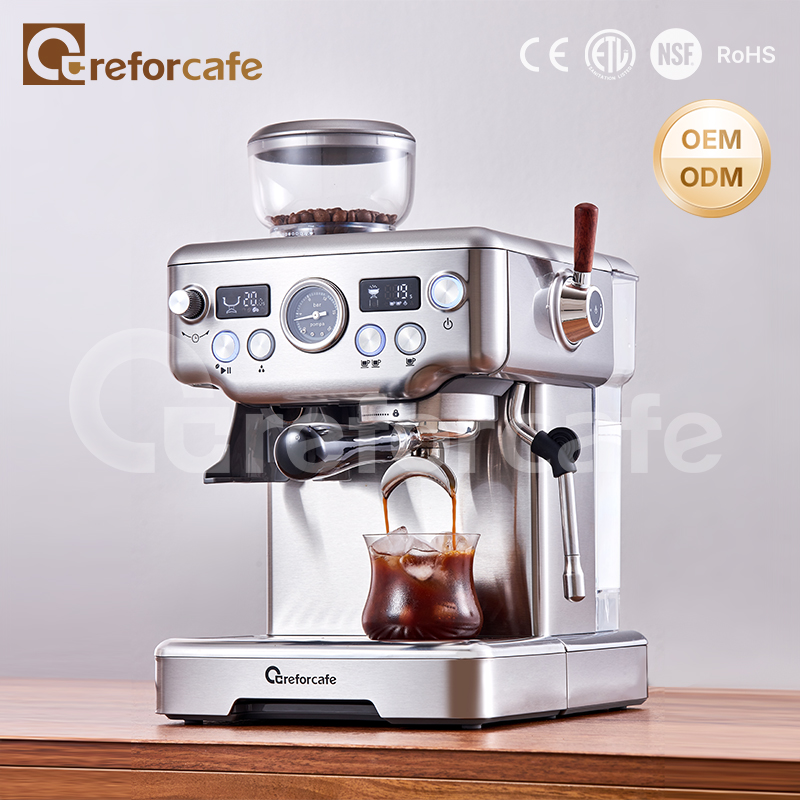
Because the Careforcafe 4-in-1 includes a built-in grinder plus water tank and steam/hot-water system, you can make a wide variety of drinks: straight espresso or Americano, milky drinks like latte or cappuccino (thanks to milk frothing), or even simply hot water (for tea or americano). This flexibility is especially good if you — or several people — enjoy different kinds of coffee drinks. For homes, small offices, or even a modest café/restaurant setup, such all-in-one versatility is a strong selling point.
Convenience & Ease of Use
Because so much is automated (grinding, tamping, hot water/steam, brewing), you don't need to master the manual process of grinding beans, tamping, timing, etc. Press a button — and get a consistent cup, over and over. That convenience is a big reason many users opt for bean-to-cup over manual espresso machines or simpler methods.
For busy mornings, offices, or households where multiple people want quick coffee without fuss, this machine fits well. The 2.1 L water tank and 180 g bean hopper capacity also mean you don't have to refill after every single cup — helpful if making several coffees daily.
The 15-bar pump and stainless-steel housing suggest it aims for a level of pressure and build quality that could approximate café-style espresso extraction (though “15 bar” is sometimes more about marketing than extraction consistency).
Value for Money / Multi-use Potential
Compared to fully commercial espresso machines (which are often expensive and bulky, meant for high-volume cafés), a machine like Careforcafe's offers a middle ground: more advanced than a simple drip brewer or capsule/pod machine, but more accessible and space-efficient than a professional machine.
Given its listed specs — built-in grinder, milk-frother, 15-bar pump, 2.1 L water tank, stainless housing — it may represent a decent value for users wanting “café-style” convenience without investing in a heavy-duty commercial machine. For small offices, homes, or even small hospitality setups (guesthouse, small B&B, small café), it could be a reasonable choice.
Known Challenges, Limitations & What to Watch Out For
While bean-to-cup machines offer many advantages, there are some trade-offs. That applies to the Careforcafe unit too — and users need to be realistic about what to expect.
Maintenance & Cleaning — A Necessity, Not an Option
Bean-to-cup machines are inherently more complex than drip coffee makers or simple stovetop devices. They grind beans, extract under pressure, may produce milk-based drinks via steam, have multiple internal parts, water tanks, bean hoppers — all of which need regular maintenance.
For example: to maintain good taste and prevent build-up, the system may require regular cleaning, descaling (especially in areas with hard water), and cleaning of milk frothing parts after every use if you make milk-based drinks. If maintenance is neglected, builds-up of mineral deposits (from water), coffee oils, old grounds, and milk residue can degrade performance, affect flavor, or even cause mechanical issues (clogs, pump stress, etc.).
In many bean-to-cup reviews, this demand for regular upkeep is one of the major downsides. Hence, while the Careforcafe promises “easy operation,” to keep delivering good coffee over time you need to commit to consistent cleaning and maintenance — not ignore it.
Less Control (Compared to Manual Machines)

Automated or semi-automatic bean-to-cup machines trade off manual control for convenience. That means you may not have as fine-tuned control over grind size, tamping pressure, extraction timing, etc., as you would with a high-end manual or semi-automatic espresso machine operated by a skilled barista.
For coffee purists or people who like to “dial in” their espresso just so (bean type, roast, grind, extraction time, temperature, pressure), bean-to-cup can feel limiting. The predictability and convenience come at the cost of flexibility and "craft." If you aim for a true “barista-level” espresso experience — with manual tweaking and experimentation — you may find bean-to-cup machines somewhat unsatisfying eventually.
Size, Space, and Noise Considerations

According to its specs, Careforcafe's machine is fairly substantial in size: ~316 × 272 × 402 mm (so roughly 32 × 27 × 40 cm), and with water tank + bean hopper + grinder + stainless build.
That means it will take up a non-trivial amount of counter space — potentially a downside in a small kitchen, cramped office but also when trying to keep things tidy.
Moreover, bean-to-cup machines often produce noise during grinding and pumping. This may be a problem early in the morning or in quiet environments.
Uncertainty of Long-Term Reliability & Real-Life Performance
As with many lower- to mid-tier bean-to-cup machines (especially those imported via wholesale platforms), there is some uncertainty around consistency, build quality, longevity, and after-sales support. Even though Careforcafe claims “free spare parts” for after-sales service, real user reviews and long-term reliability in everyday home or office conditions remain to be seen.
Also, “15-bar” pump pressure is often more marketing than guarantee of perfect extraction — many experts consider consistent pressure and temperature control, along with grinder quality, as more important.
So while a 15-bar pump looks good on paper, the quality of grind, internal components, and maintenance will really determine whether the espresso tastes like café-grade or just “good home coffee.”
Who This Machine is Best For — Use Cases & Suitability
Given strengths and limitations, who is the Careforcafe 4-in-1 best suited for?
- Home users who want café-style coffee without fuss: If you like fresh espresso, cappuccino, latte, but don't want to grind beans by hand, tamp, and clean an espresso machine — this machine gives you ease + decent flexibility.
- Small offices or shared spaces: 2.1 L water tank + 180 g bean hopper + up to “20 cups capacity” before refill — good for daily coffee use by multiple people (family, housemates, staff).
- Small cafés / guesthouses / B&Bs or small hospitality venues: For low-to-moderate volume, and if you want a simpler all-in-one solution without high-end commercial machines.
- People with limited espresso experience: Since it automates most of the process, it's relatively easy even for beginners.
Conversely, the machine is less ideal for:
- Coffee purists / baristas / enthusiasts who want full manual control and the option to “dial in” grind size, tamp pressure, extraction time, etc.
- High-volume cafés where dozens of drinks per hour are needed — bean-to-cup may become a bottleneck compared to professional multi-group machines.
- Users uninterested in regular maintenance: If you dislike cleaning, descaling, or tending to milk frothing parts, bean-to-cup will quickly become more hassle than convenience.
Maintenance & Care — What to Do to Keep It Running Smoothly
Because bean-to-cup machines are more complex than simple coffee makers, maintenance is pivotal. Based on general advice for bean-to-cup machines and best practices — which apply to Careforcafe 4-in-1 — here are guidelines:
- Use filtered or soft water if possible. Hard water leads to mineral buildup, scale, which degrades performance, flavor, and can damage internal parts over time.
- Descale regularly. Depending on water hardness and usage frequency — maybe every 2–3 months — to prevent limescale and preserve heating/flow efficiency.
- Clean milk frothing parts after each use (if you make milk-based drinks): Milk residue can quickly accumulate, become sticky, sour, or clog pipes.
- Empty and clean drip tray, grounds container, bean chute occasionally: Spent grounds, oils, and moisture can build up and degrade taste or clog parts.
- Use fresh beans — and avoid flavored or oily beans if possible: Oils and residues from certain beans may accelerate buildup in grinders and brew group. Some bean-to-cup machine communities warn that oily beans can “gum up” grinders faster. > “they don't give you as much control....this is the trade-off for convenience”
- Run cleaning / rinse cycles if machine has them (or do manual rinse): Many bean-to-cup machines offer cleaning programs; using them helps keep internal passages clear and hygienic.
If you commit to consistent maintenance, you'll likely enjoy stable performance for months or years. If you skip cleaning/descaling, coffee quality and machine health can deteriorate quickly.
Final Verdict: Balanced View
The Careforcafe Home Use 4-in-1 bean-to-cup coffee machine offers — on paper — a solid balance of convenience, versatility, and value. Its built-in grinder + milk frother + pump + large water tank + stainless build give it the potential to serve as a versatile “all-in-one coffee solution” for home, office, or small hospitality settings. For someone who wants café-style drinks (espresso, latte, cappuccino) with minimal fuss — especially without investing in a heavy-duty professional machine — Careforcafe can make sense.
However — and this is important — bean-to-cup machines come with trade-offs. The experience will never quite match a skilled barista manually adjusting grind, tamp, extraction; nor will it match high-end commercial machines in terms of robustness or consistency under high load. Moreover, regular maintenance (cleaning, descaling, milk-system care) is not optional — neglect it, and you risk degraded taste, odd odors, breakdowns, or shorter machine lifespan.
So my recommendation: If you want a convenient, reasonably priced, easy-to-use multi-drink coffee machine for home or small office use — and you are willing to commit to the required maintenance , the Careforcafe 4-in-1 is a worthwhile option and may well give you “good enough” coffee for everyday use. But if you are a serious coffee aficionado, prefer maximum control over extraction, or plan heavy daily usage (many cups, varied drinks), you might eventually find the limitations (automation, maintenance demand, potential reliability issues) frustrating — and might want to consider a higher-end bean-to-cup model or even a semi-professional manual/espresso setup.